企业资产管理系统
摘要
随着信息技术在管理上越来越深入而广泛的应用,管理信息系统的实施在技术上已逐步成熟。本文介绍了企业资产管理系统的开发全过程。通过分析企业资产管理系统方面的不足,创建了一个计算机管理企业资产管理系统的方案。文章介绍了企业资产管理系统的系统分析部分,包括可行性分析等,系统设计部分主要介绍了系统功能设计和数据库设计。
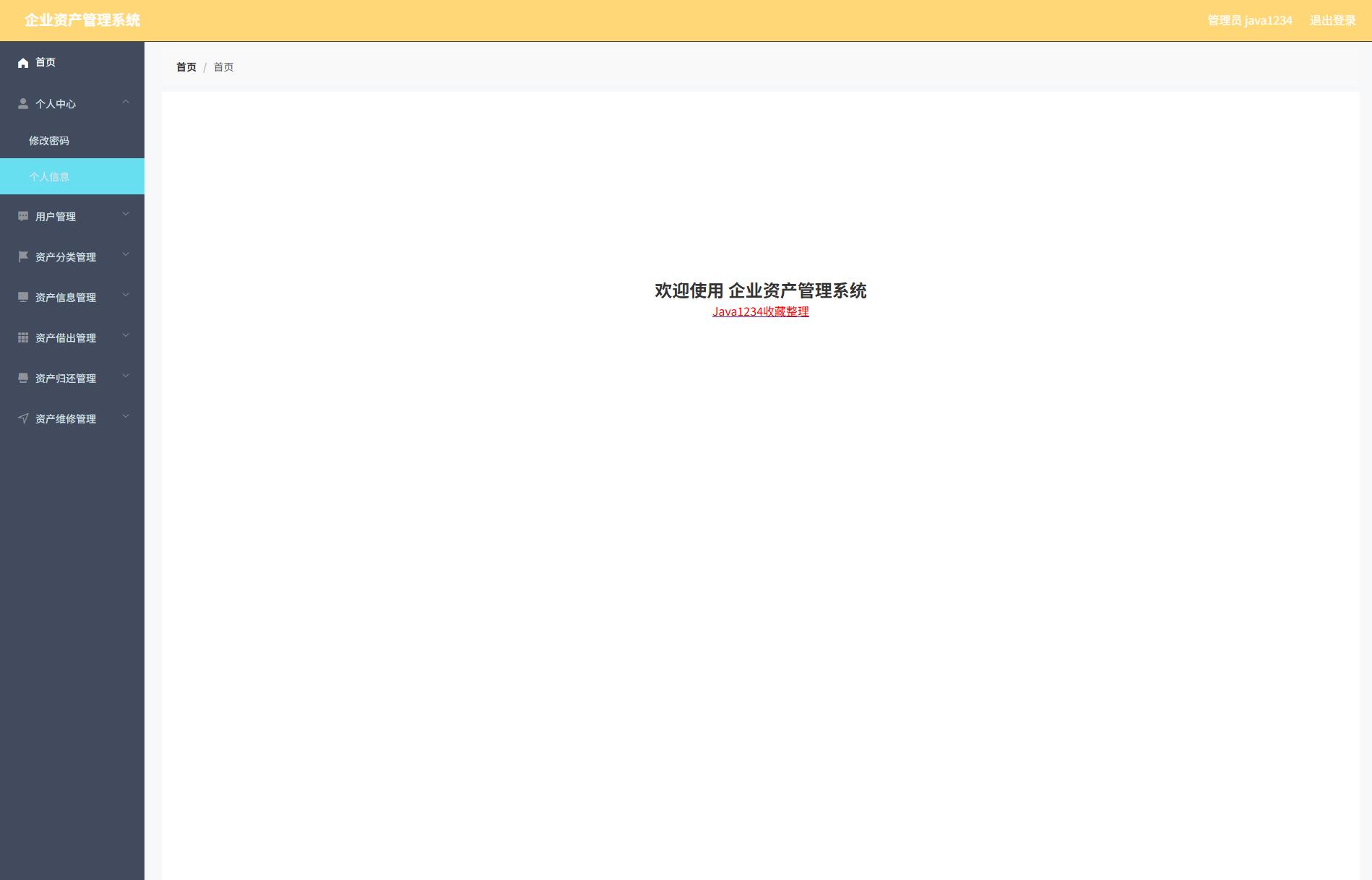
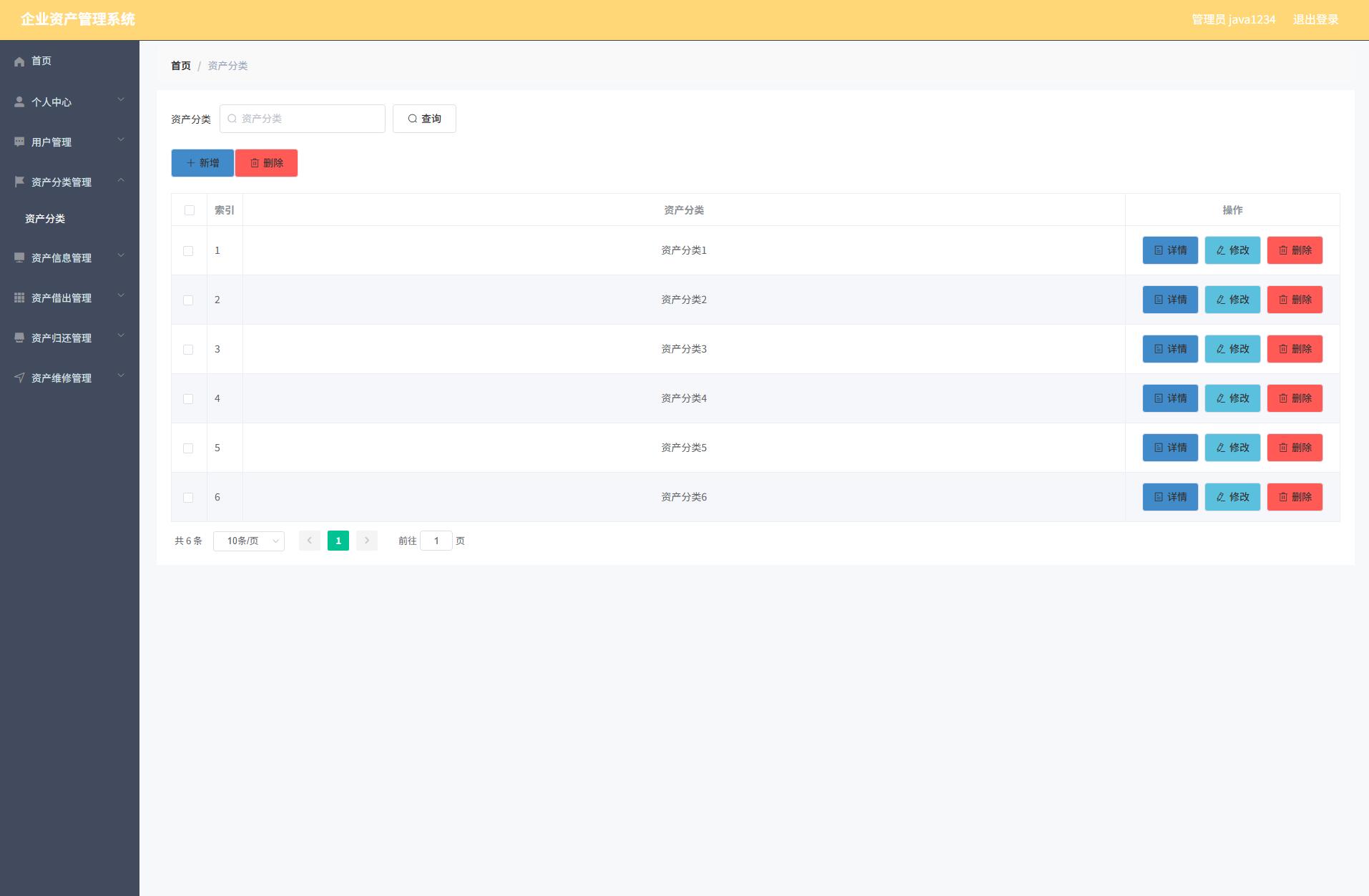
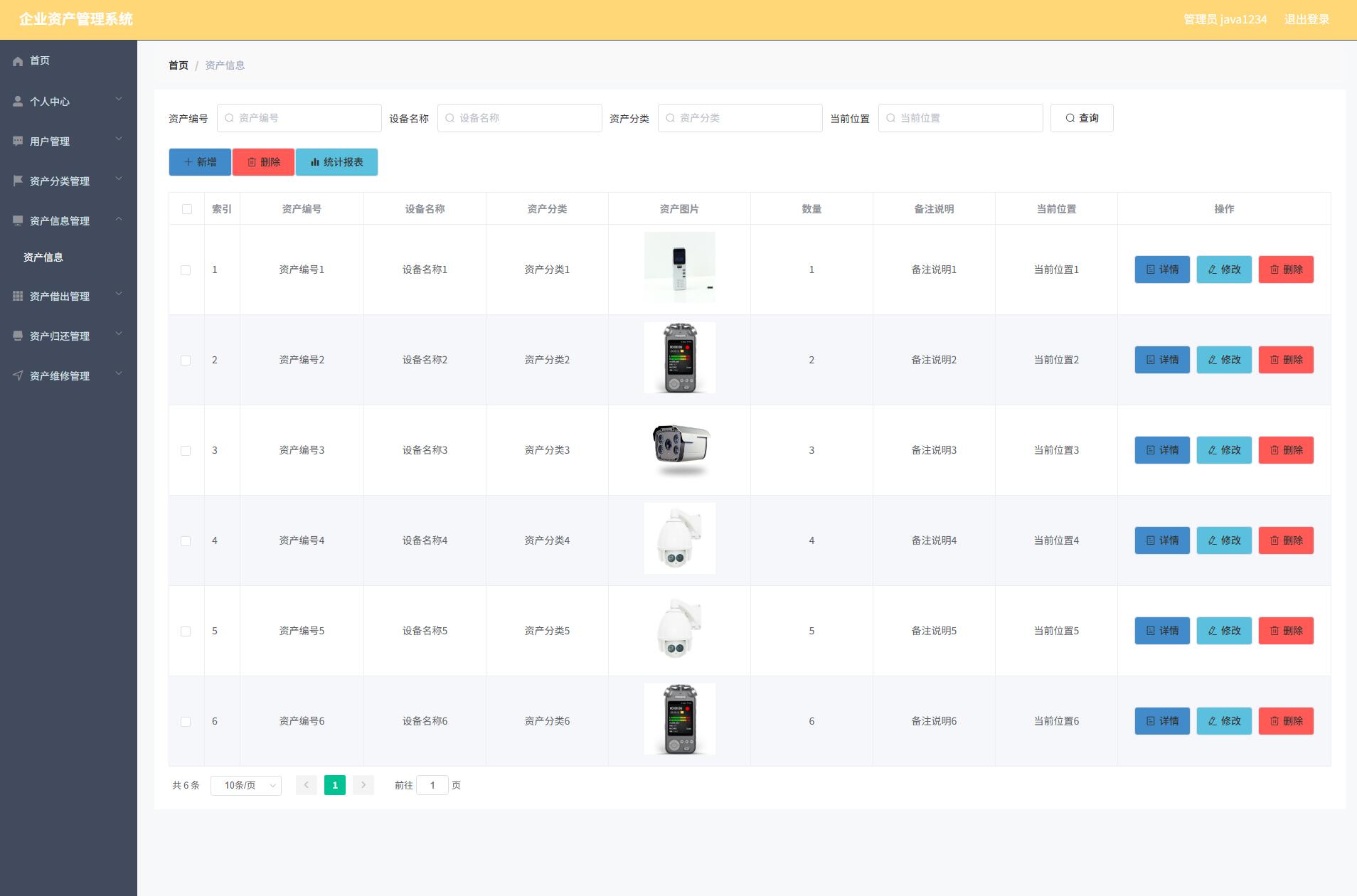
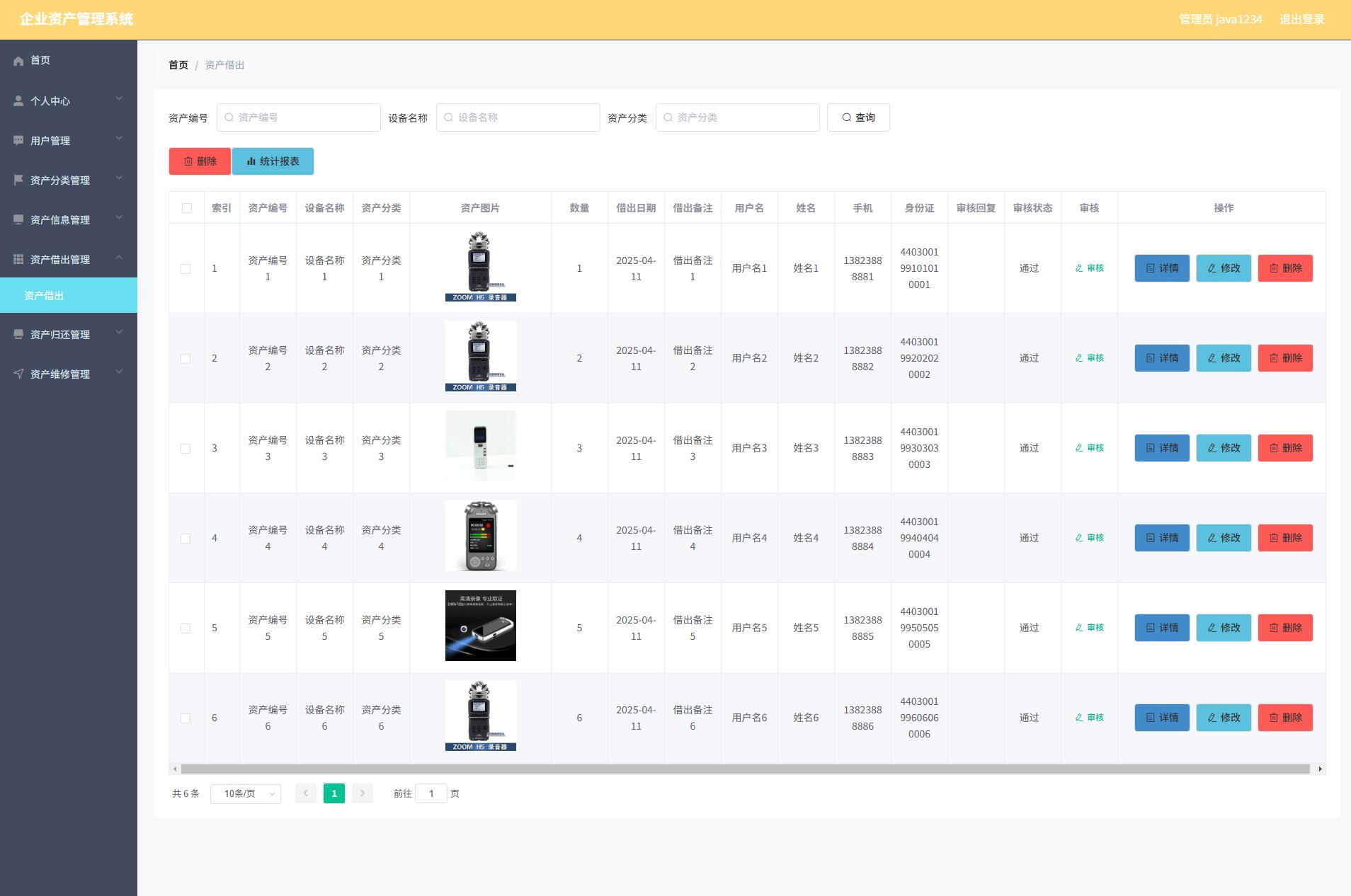
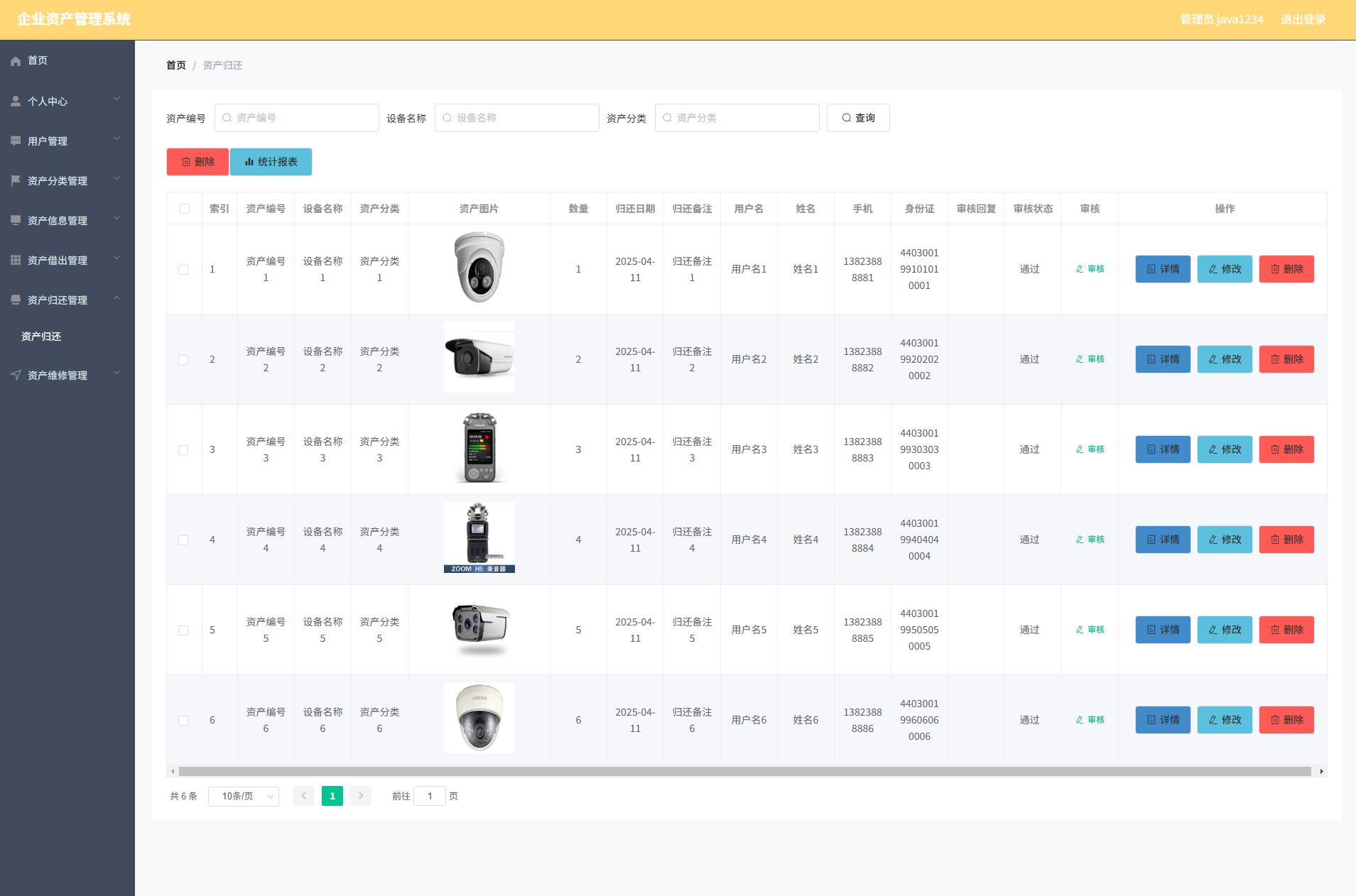
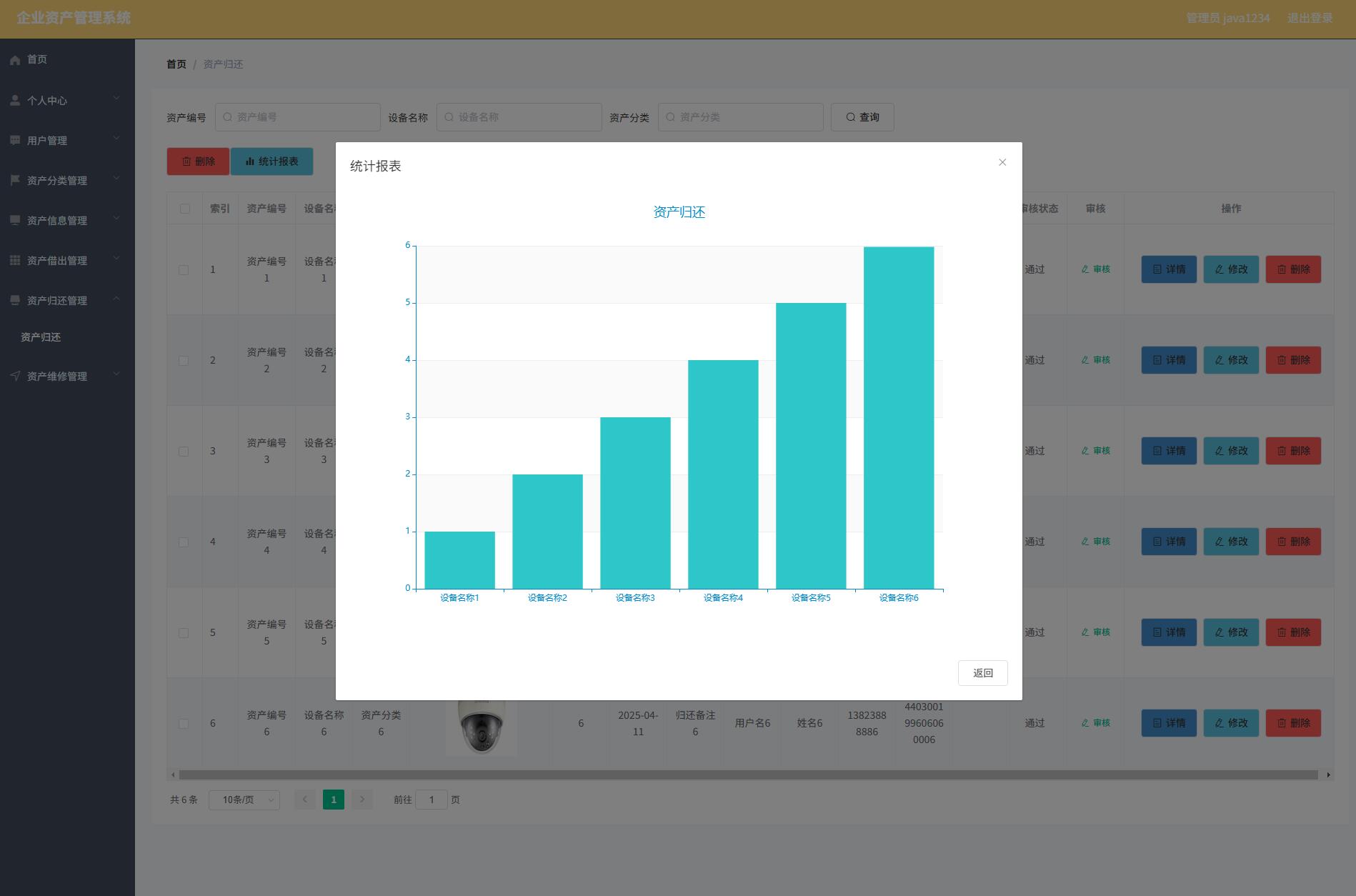
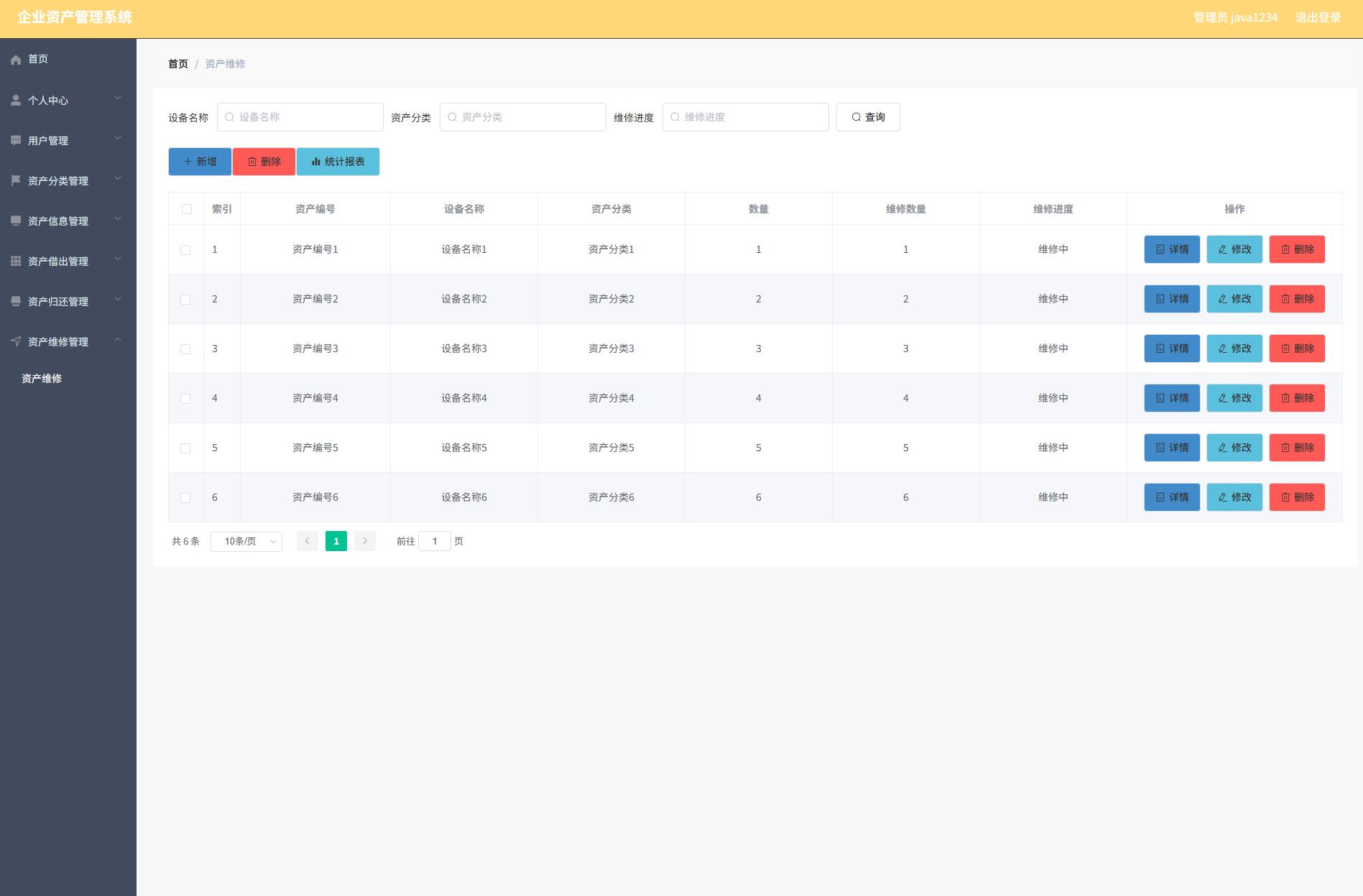
本企业资产管理系统管理员功能有个人中心,用户管理,资产分类管理,资产信息管理,资产借出管理,资产归还管理,资产维修管理。用户可以对资产进行借出和归还操作。因而具有一定的实用性。
本站是一个B/S模式系统,采用Spring Boot框架,MYSQL数据库设计开发,充分保证系统的稳定性。系统具有界面清晰、操作简单,功能齐全的特点,使得企业资产管理系统管理工作系统化、规范化。
关键词:企业资产管理系统;Spring Boot框架;MYSQL数据库
Abstract
With the deepening and extensive application of information technology in management, the implementation of management information systems has gradually matured in technology. This article introduces the entire development process of the enterprise asset management system. By analyzing the shortcomings of the enterprise asset management system, a solution for computer management of the enterprise asset management system was created. The article introduces the system analysis part of the enterprise asset management system, including feasibility analysis, etc. The system design part mainly introduces the system function design and database design.
The corporate asset management system administrator functions include personal center, user management, asset classification management, asset information management, asset loan management, asset return management, and asset maintenance management. Users can lend and return assets. So it has a certain practicability.
This site is a B/S model system, using Spring Boot framework, MYSQL database design and development, fully guarantee the stability of the system. The system has the characteristics of clear interface, simple operation and complete functions, which makes the management of enterprise asset management system systematized and standardized.
Keywords:Enterprise asset management system; Spring Boot framework; MYSQL database
目录
1系统概述
1.1 研究背景
1.2研究目的
1.3系统设计思想
2相关技术
2.1 MYSQL数据库
2.2 B/S结构
2.3 Spring Boot框架简介
2.4 JSP技术
2.5 VUE框架
2.6Java语言介绍
2.7 SSM框架简介
3系统分析
3.1可行性分析
3.1.1技术可行性
3.1.2经济可行性
3.1.3操作可行性
3.2系统性能分析
3.2.1 系统安全性
3.2.2 数据完整性
3.3系统界面分析
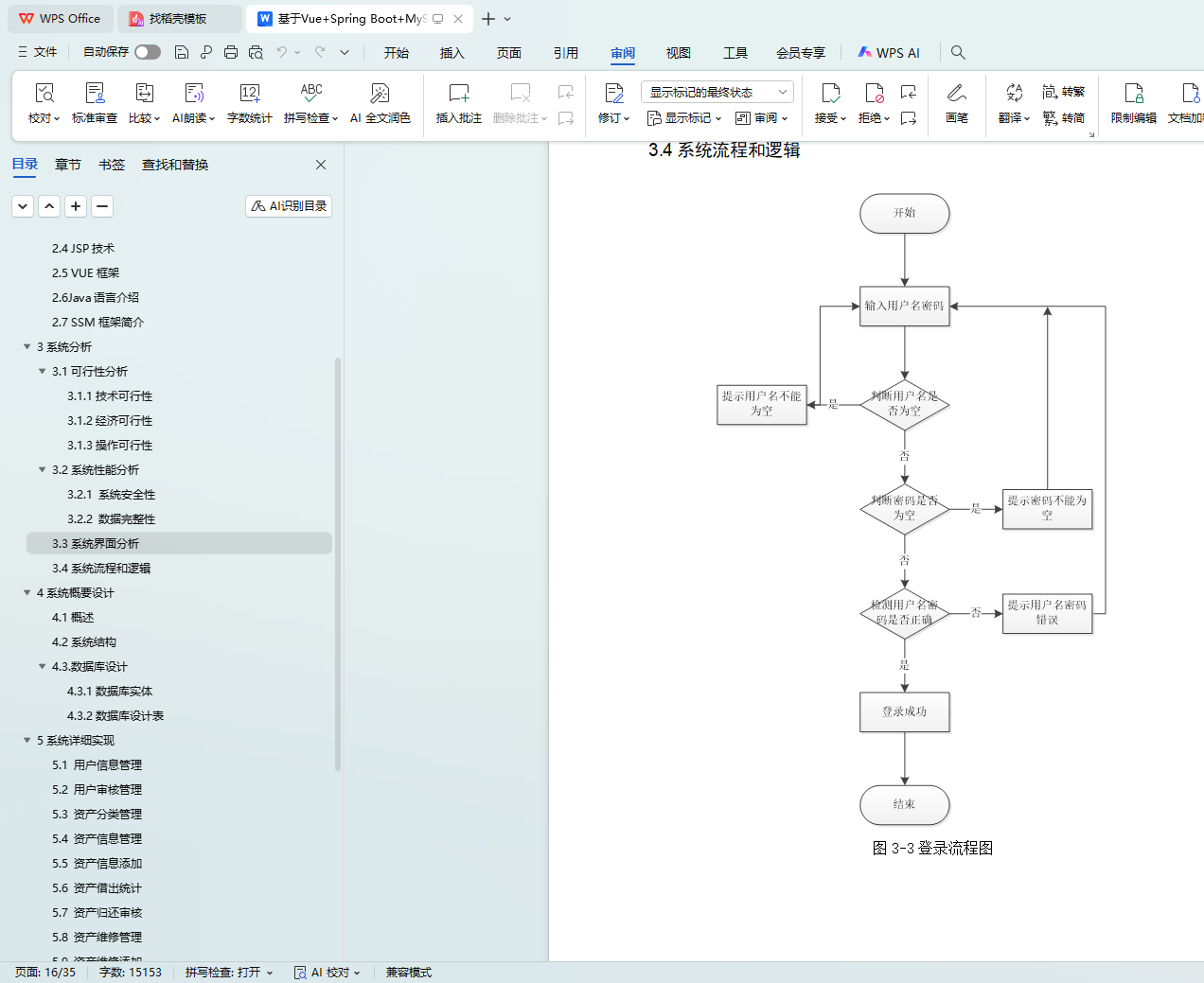
3.4系统流程和逻辑
4系统概要设计
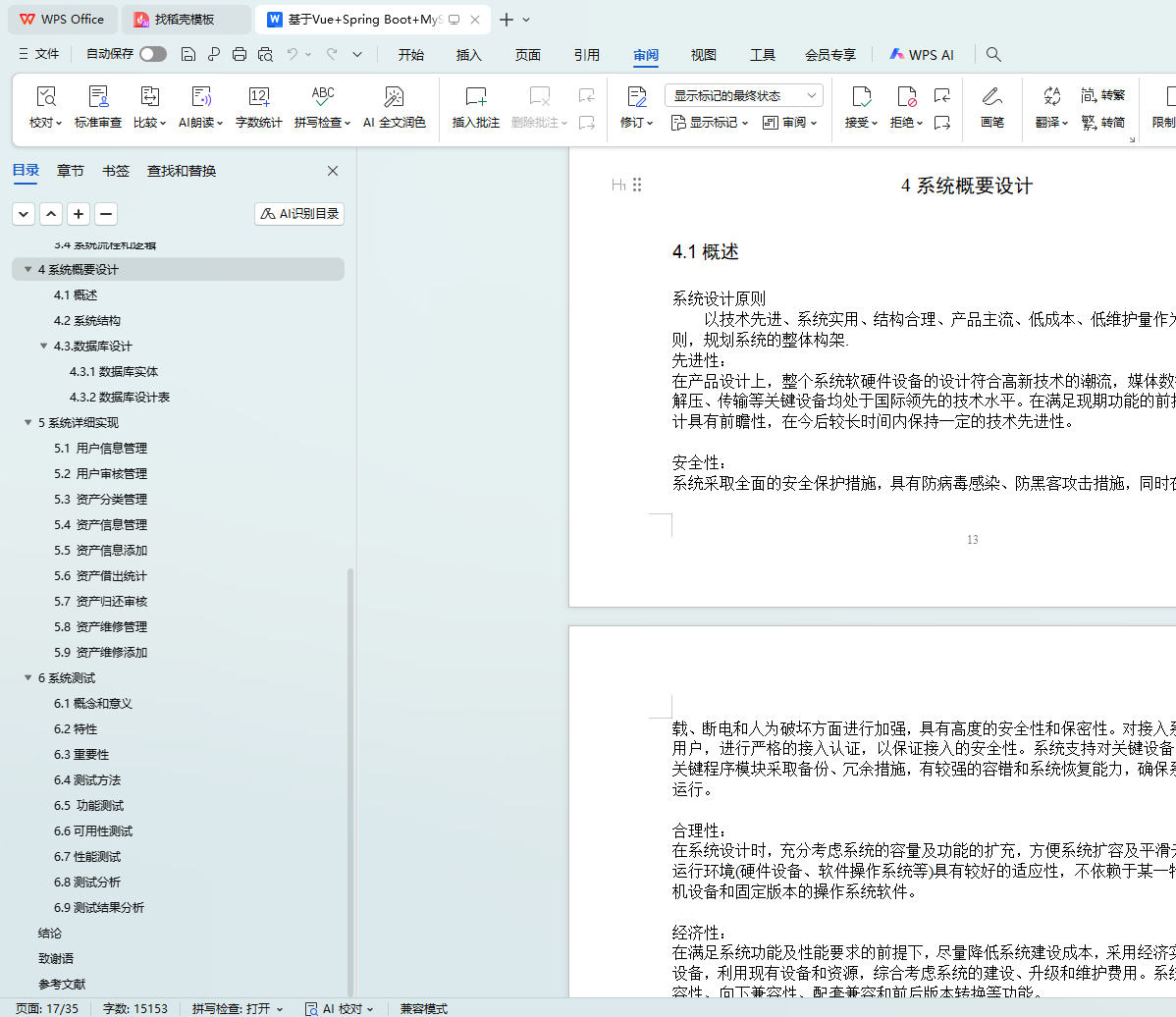
4.1概述
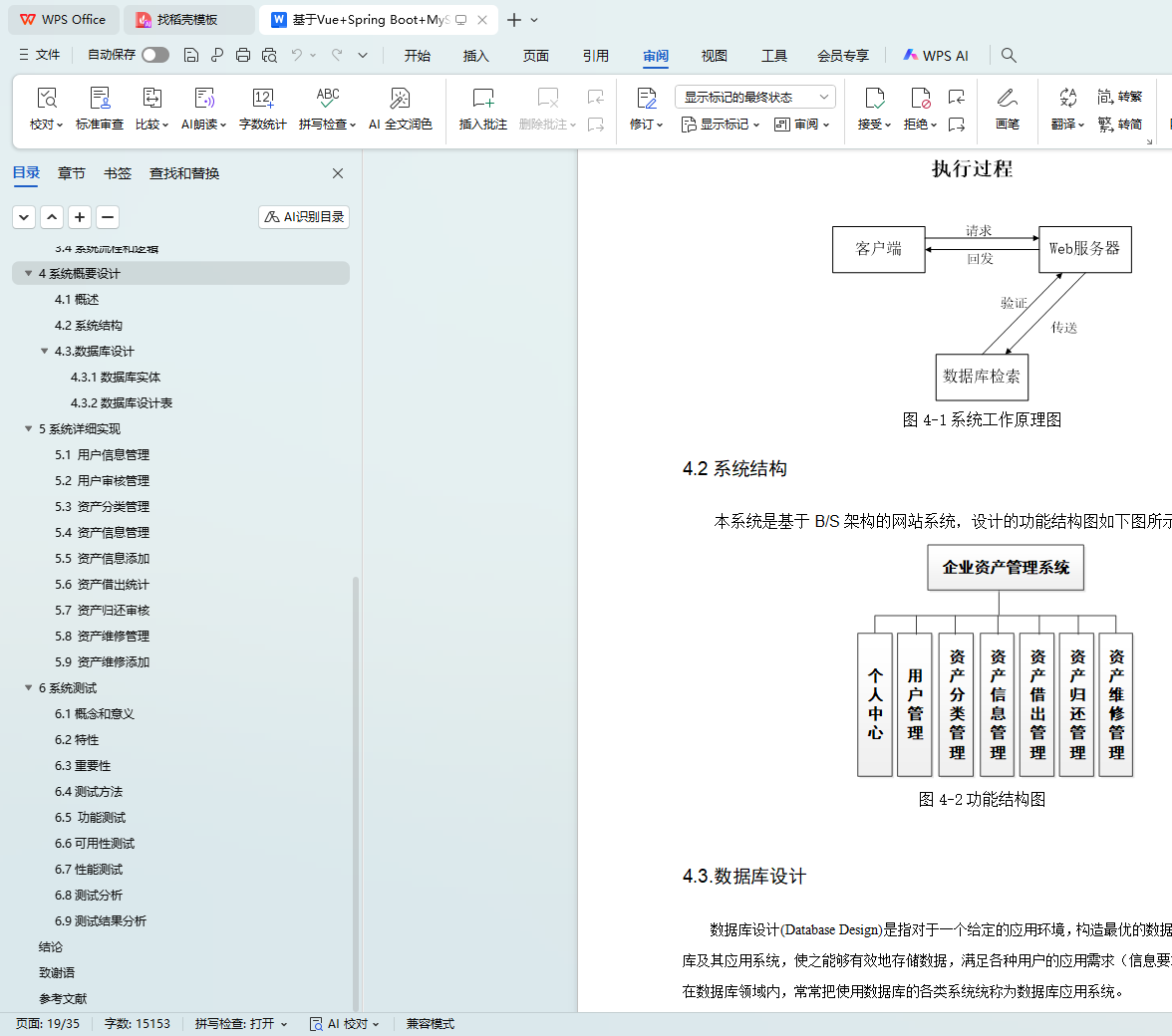
4.2系统结构
4.3.数据库设计
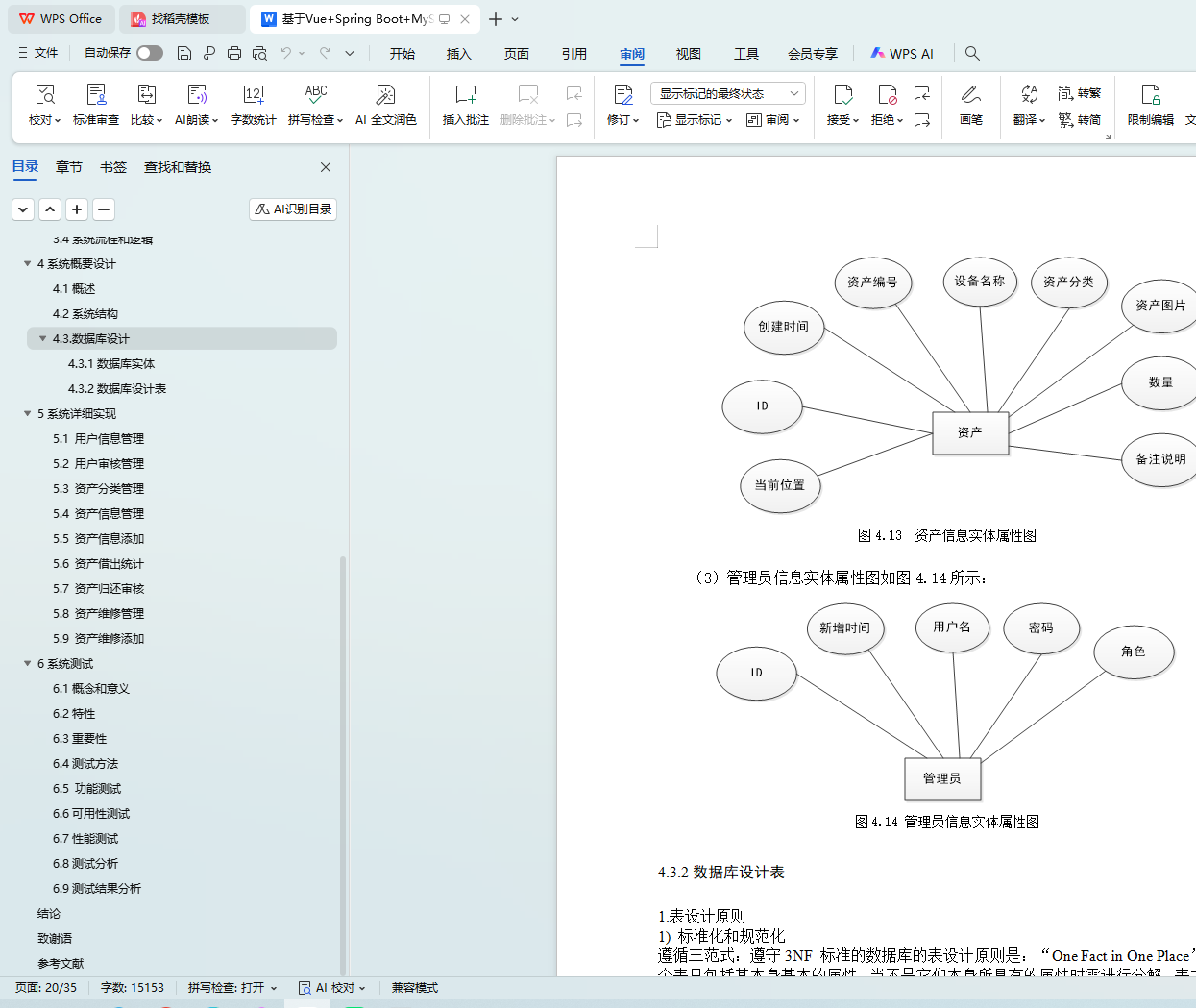
4.3.1数据库实体
4.3.2数据库设计表
5系统详细实现
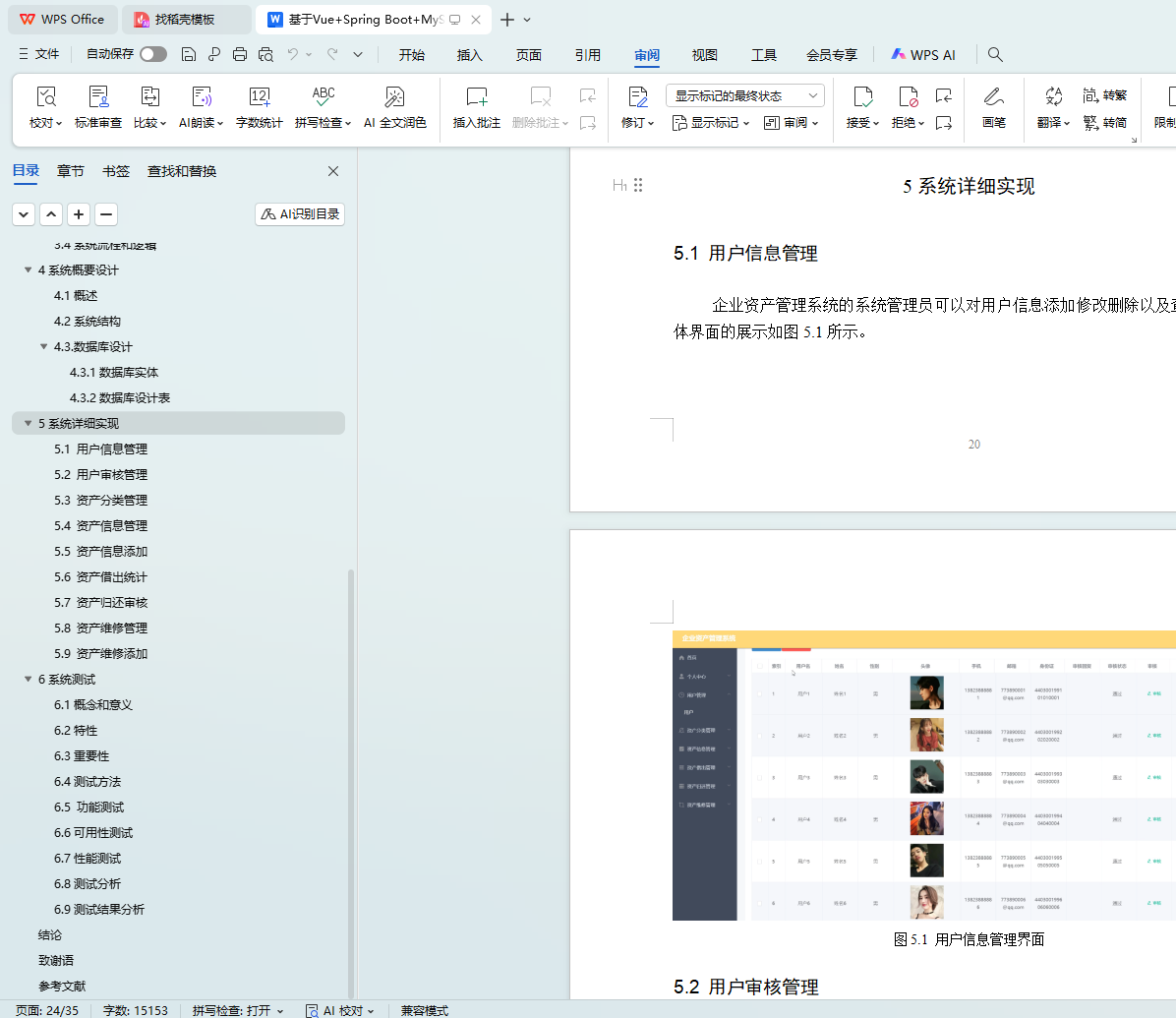
5.1 用户信息管理
5.2 用户审核管理
5.3 资产分类管理
5.4 资产信息管理
5.5 资产信息添加
5.6 资产借出统计
5.7 资产归还审核
5.8 资产维修管理
5.9 资产维修添加
6系统测试
6.1概念和意义
6.2特性
6.3重要性
6.4测试方法
6.5 功能测试
6.6可用性测试
6.7性能测试
6.8测试分析
6.9测试结果分析
结论
致谢语
参考文献