摘 要
本文聚焦教育行业,对人工智能技术应用现状及趋势展开调查研究。在综合运用方面,人工智能正全方位融入教育领域。它改造传统教学模式,通过构建智能教学平台,优化课堂教学管理效率,为教学带来新活力。在提升学生综合素养上,创新叙事性学习工具培养机制,开发互动式虚拟实验平台,应用模拟仿真技术;同时探索创新思维能力智能培养方法,构建机器辅助项目式学习框架,实施跨学科知识融合智能引导。人工智能还深度渗透教育管理,构建数据驱动型教育决策系统,综合设计学生成长监测体系,研究教育资源优化配置智能算法;并推动师资培养与评估体系智能化升级,提供教师专业发展精准支持方案,开展课堂互动质量评估自动化实验。近期,多模态学习交互智能化演进,全球教育智能化标准构建动态明显,国际教育科技合作取得新进展,未来十年技术路线图制定方向逐渐明晰。然而,人工智能在教育应用中也面临伦理安全顾虑,如隐私保护问题、智能教育工具的社会责任等。针对这些问题,本文设计了相应技术对策,提出社会责任与限制方案,旨在为教育行业合理应用人工智能提供全面参考,促进教育智能化健康、可持续发展。
关键词:教育行业;人工智能技术;应用现状;发展趋势;伦理安全
Abstract
This paper focuses on the education sector and conducts an investigation and research on the current application status and trends of artificial intelligence (AI) technologies. In terms of comprehensive application, AI is integrating into the education field in an all-round way. It transforms traditional teaching models by constructing intelligent teaching platforms and optimizing the efficiency of classroom teaching management, bringing new vitality to teaching. Regarding the enhancement of students' comprehensive qualities, it innovates the training mechanism of narrative learning tools, develops interactive virtual experiment platforms, and applies simulation technologies. Meanwhile, it explores intelligent training methods for innovative thinking abilities, constructs machine-assisted project-based learning frameworks, and implements intelligent guidance strategies for interdisciplinary knowledge integration. AI also deeply penetrates education management by constructing data-driven educational decision-making systems, comprehensively designing student growth monitoring systems, and researching intelligent algorithms for the optimal allocation of educational resources. It also promotes the intelligent upgrading of teacher training and evaluation systems, providing precise support plans for teachers' professional development and conducting automated experiments on classroom interaction quality evaluation. Recently, the intelligent evolution of multimodal learning interactions has been evident, and there have been significant developments in the construction of global education intelligence standards. New progress has been made in international educational technology cooperation, and the direction for formulating a technology roadmap for the next decade is gradually becoming clear. However, the application of AI in education also faces ethical and safety concerns, such as privacy protection issues and the social responsibilities of intelligent educational tools. In response to these issues, this paper designs corresponding technical countermeasures and proposes social responsibility and restriction plans, aiming to provide a comprehensive reference for the rational application of AI in the education sector and promote the healthy and sustainable development of educational intelligence.
Keywords:education sector; artificial intelligence technology; application status; development trend; ethical safety
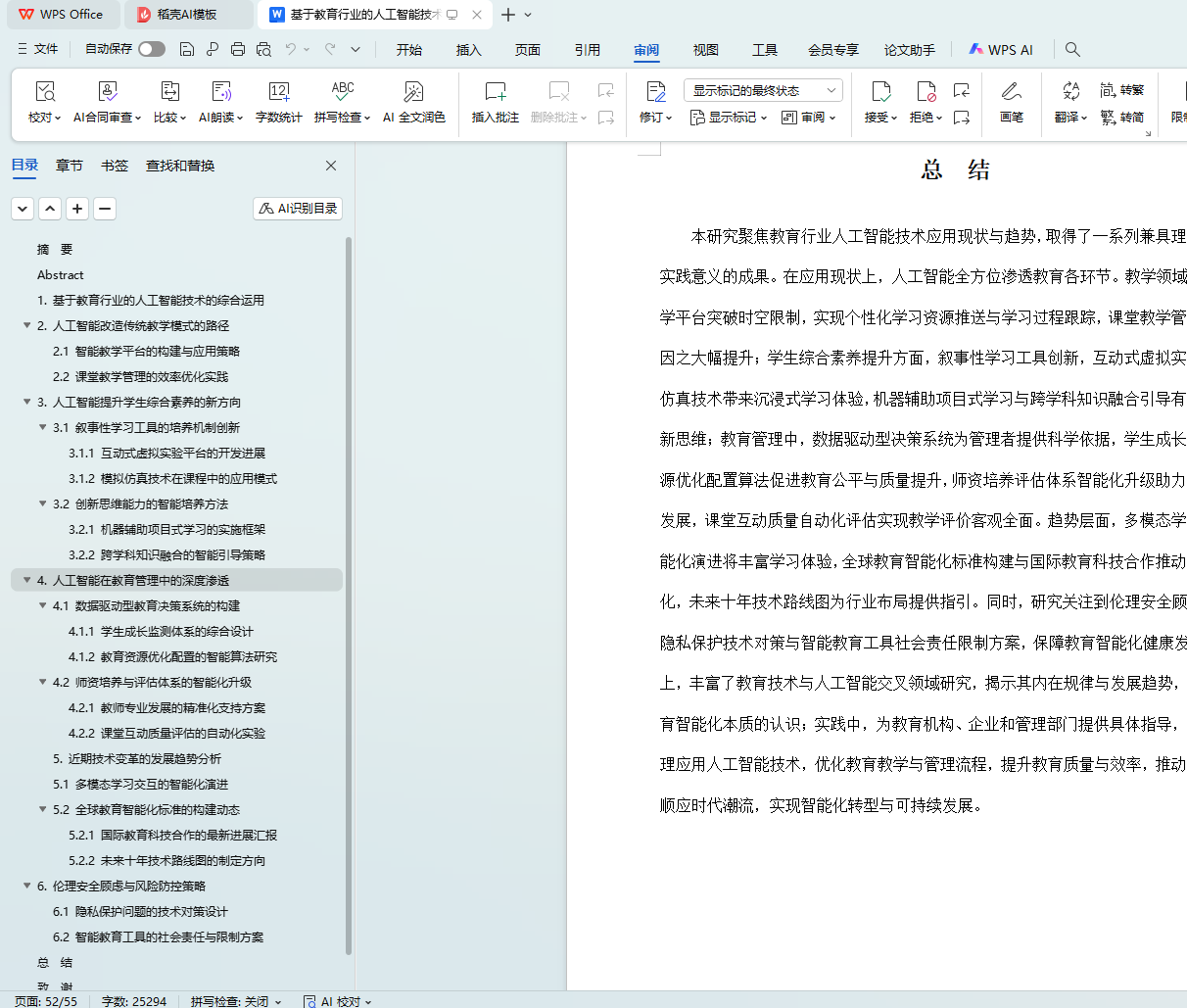
目 录
摘 要
Abstract
1. 基于教育行业的人工智能技术的综合运用
2. 人工智能改造传统教学模式的路径
2.1 智能教学平台的构建与应用策略
2.2 课堂教学管理的效率优化实践
3. 人工智能提升学生综合素养的新方向
3.1 叙事性学习工具的培养机制创新
3.1.1 互动式虚拟实验平台的开发进展
3.1.2 模拟仿真技术在课程中的应用模式
3.2 创新思维能力的智能培养方法
3.2.1 机器辅助项目式学习的实施框架
3.2.2 跨学科知识融合的智能引导策略
4. 人工智能在教育管理中的深度渗透
4.1 数据驱动型教育决策系统的构建
4.1.1 学生成长监测体系的综合设计
4.1.2 教育资源优化配置的智能算法研究
4.2 师资培养与评估体系的智能化升级
4.2.1 教师专业发展的精准化支持方案
4.2.2 课堂互动质量评估的自动化实验
5. 近期技术变革的发展趋势分析
5.1 多模态学习交互的智能化演进
5.2 全球教育智能化标准的构建动态
5.2.1 国际教育科技合作的最新进展汇报
5.2.2 未来十年技术路线图的制定方向
6. 伦理安全顾虑与风险防控策略
6.1 隐私保护问题的技术对策设计
6.2 智能教育工具的社会责任与限制方案
总 结
致 谢
参考文献