中文摘要
随着微信小程序的快速发展,基于小程序的知识问答类应用在教育和娱乐领域得到了广泛应用。为满足用户在碎片化时间中的学习与互动需求,本文设计并实现了一款基于uni-app与 Express的问答对战微信小程序。系统采用前后端分离架构,前端基于uni-app实现跨平台小程序界面,后端则基于Express构建接口服务,并使用MySQL数据库存储核心数据。系统主要功能包括用户注册登录、题库练习、错题本管理、题目收藏、问答对战、评论互动与反馈建议等。通过模块化设计,确保系统具备良好的扩展性与可维护性。测试结果表明,该系统界面简洁、运行稳定、功能完善,能够为用户提供便捷、高效、有趣的知识答题体验。本项目不仅具备良好的实用性与可拓展性,也为后续基于uni-app和Express技术栈的小程序开发提供了有益参考。
关键词:微信小程序,问答,uni-app,Express
Abstract
With the rapid advancement of WeChat mini-programs, knowledge Q&A applications built on mini-program platforms have gained widespread adoption in the domains of education and entertainment. To address users' learning and interaction requirements during fragmented time periods, this paper presents the design and implementation of a question-and-answer battle WeChat mini-program based on uni-app and Express. The system employs a front-end and back-end separation architecture. The front-end develops cross-platform mini-program interfaces using uni-app, while the back-end constructs API services with Express and utilizes a MySQL database to store core data. Key functionalities of the system encompass user registration and login, question bank practice, error book management, question collection, question-and-answer battles, comment interaction, and feedback suggestions. Through modularization design, the system ensures excellent scalability and maintainability. Test results indicate that the system features an intuitive interface, stable performance, and comprehensive functionality, providing users with a convenient, efficient, and engaging knowledge Q&A experience. This project not only demonstrates strong practicality and scalability but also serves as a valuable reference for subsequent mini-program development leveraging the uni-app and Express technology stacks.
Keywords: WeChat Mini-program, Question-and-Answer, uni-app, Express
目 录
中文摘要
Abstract
第1章 引言
1.1 课题背景
1.2 目的和意义
1.3 研究现状
1.4 系统设计思想
1.5 系统开发环境
1.5.1 Vscode简介
1.5.2 Apifox简介
1.5.3 微信开发者工具简介
1.6 硬件要求
第2章 可行性分析
2.1 经济可行性
2.1.1 项目的市场需求与商业价值
2.1.2 项目的可持续性
2.1.3 项目的开发成本
2.2 技术可行性
2.2.1 技术开发论述
2.2.2 技术的成熟性理论
2.2.3 技术风险分析
第3章 需求分析
3.1 系统功能分析
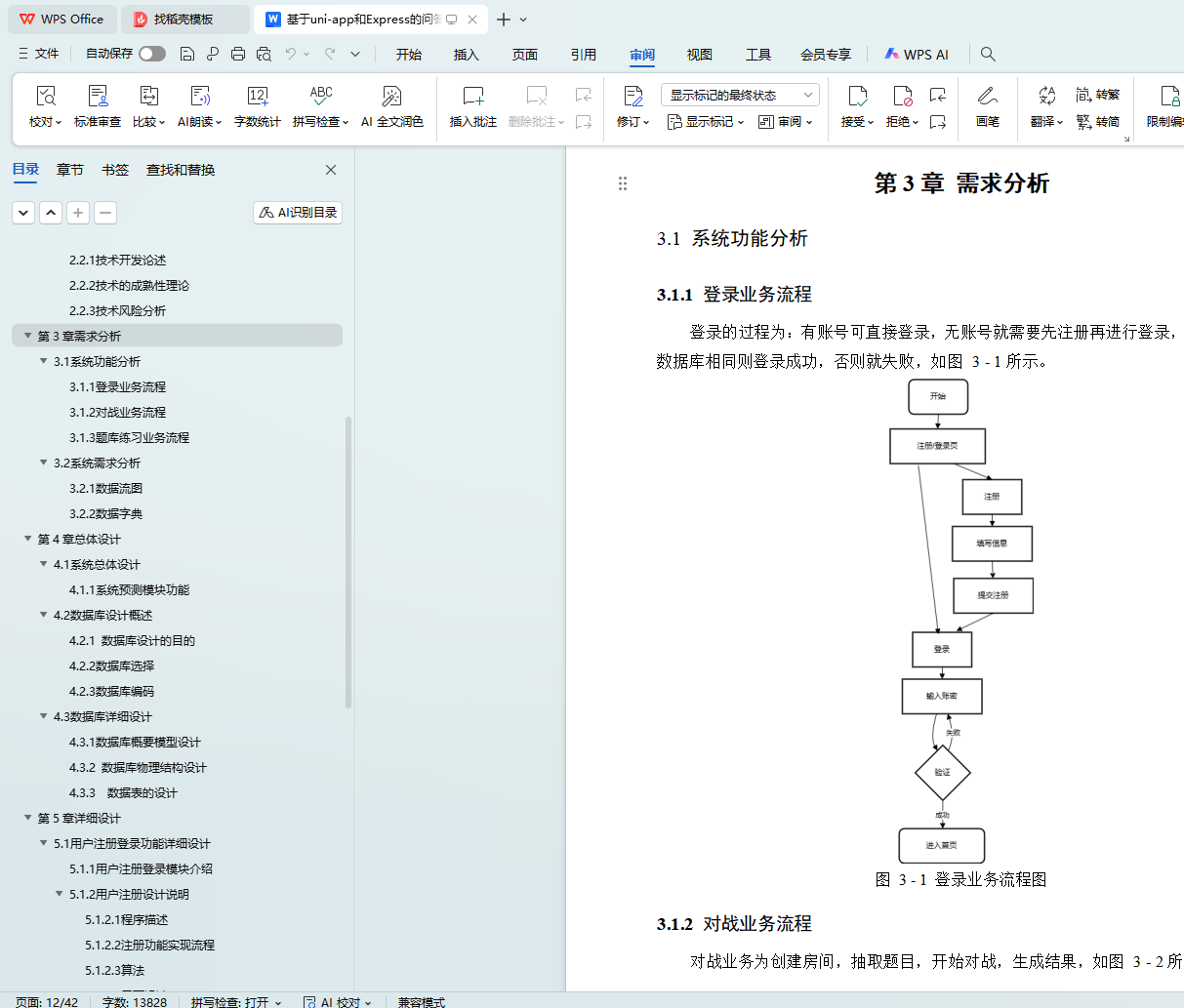
3.1.1 登录业务流程
3.1.2 对战业务流程
3.1.3 题库练习业务流程
3.2 系统需求分析
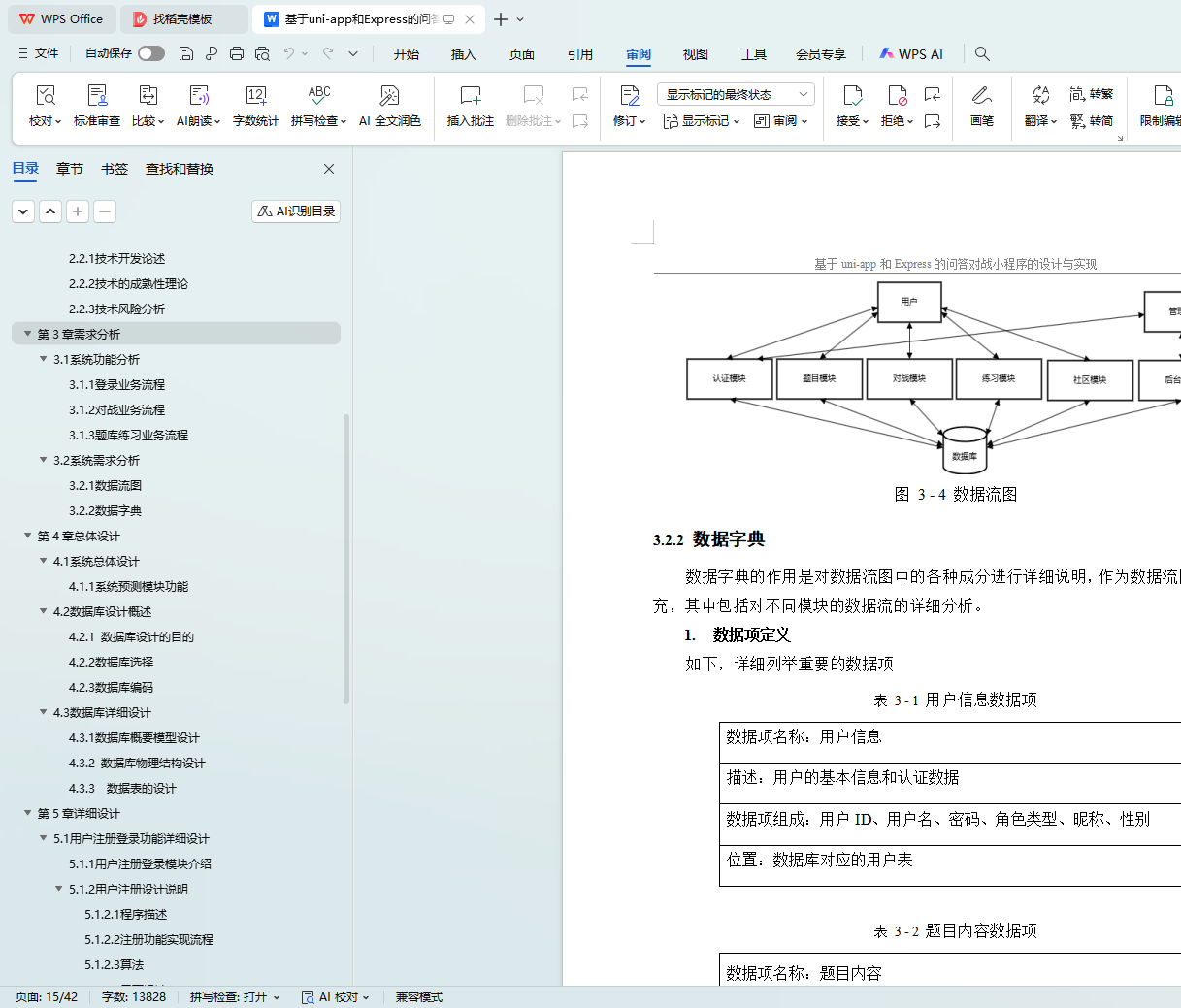
3.2.1 数据流图
3.2.2 数据字典
第4章 总体设计
4.1 系统总体设计
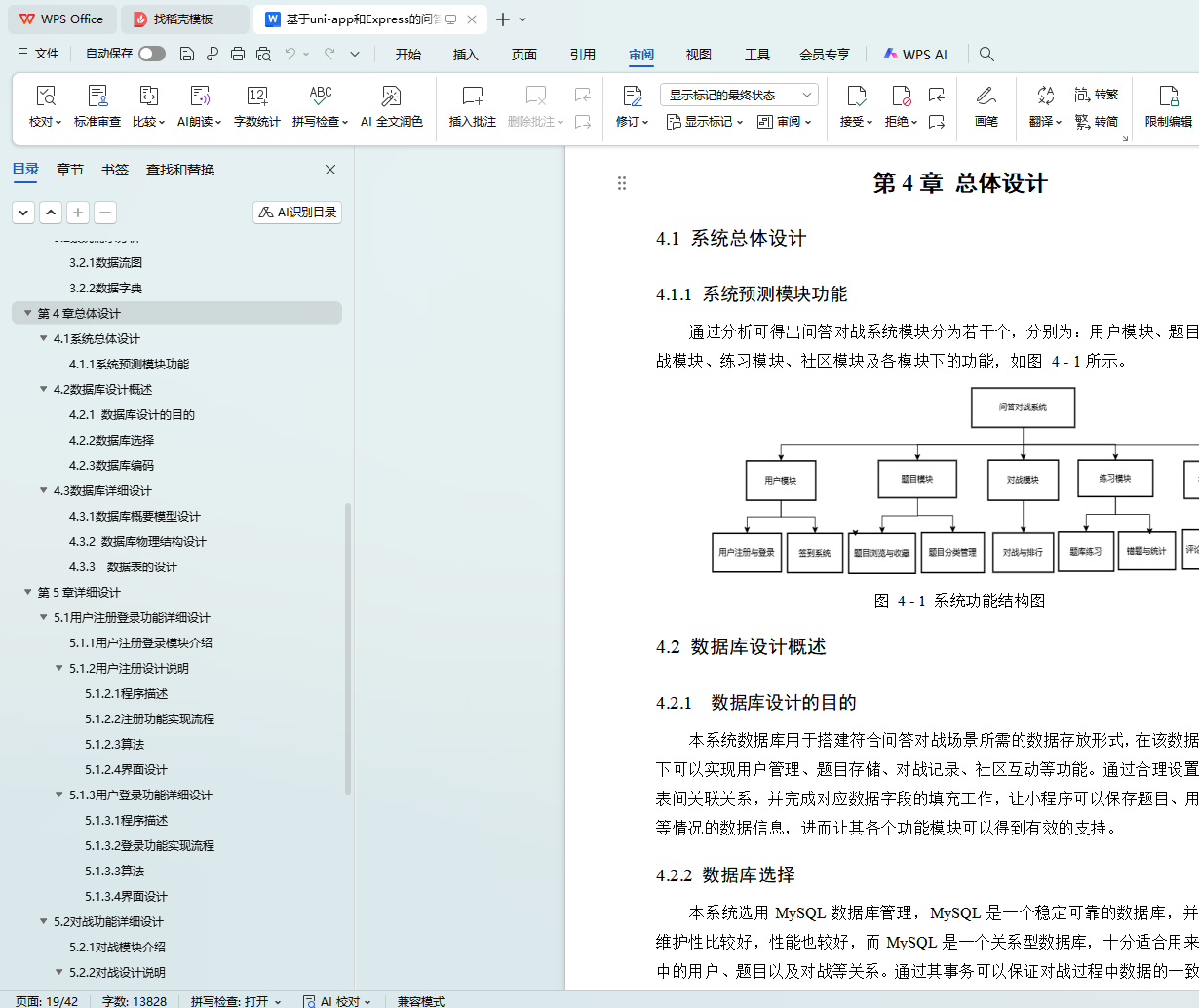
4.1.1 系统预测模块功能
4.2 数据库设计概述
4.2.1 数据库设计的目的
4.2.2 数据库选择
4.2.3 数据库编码
4.3 数据库详细设计
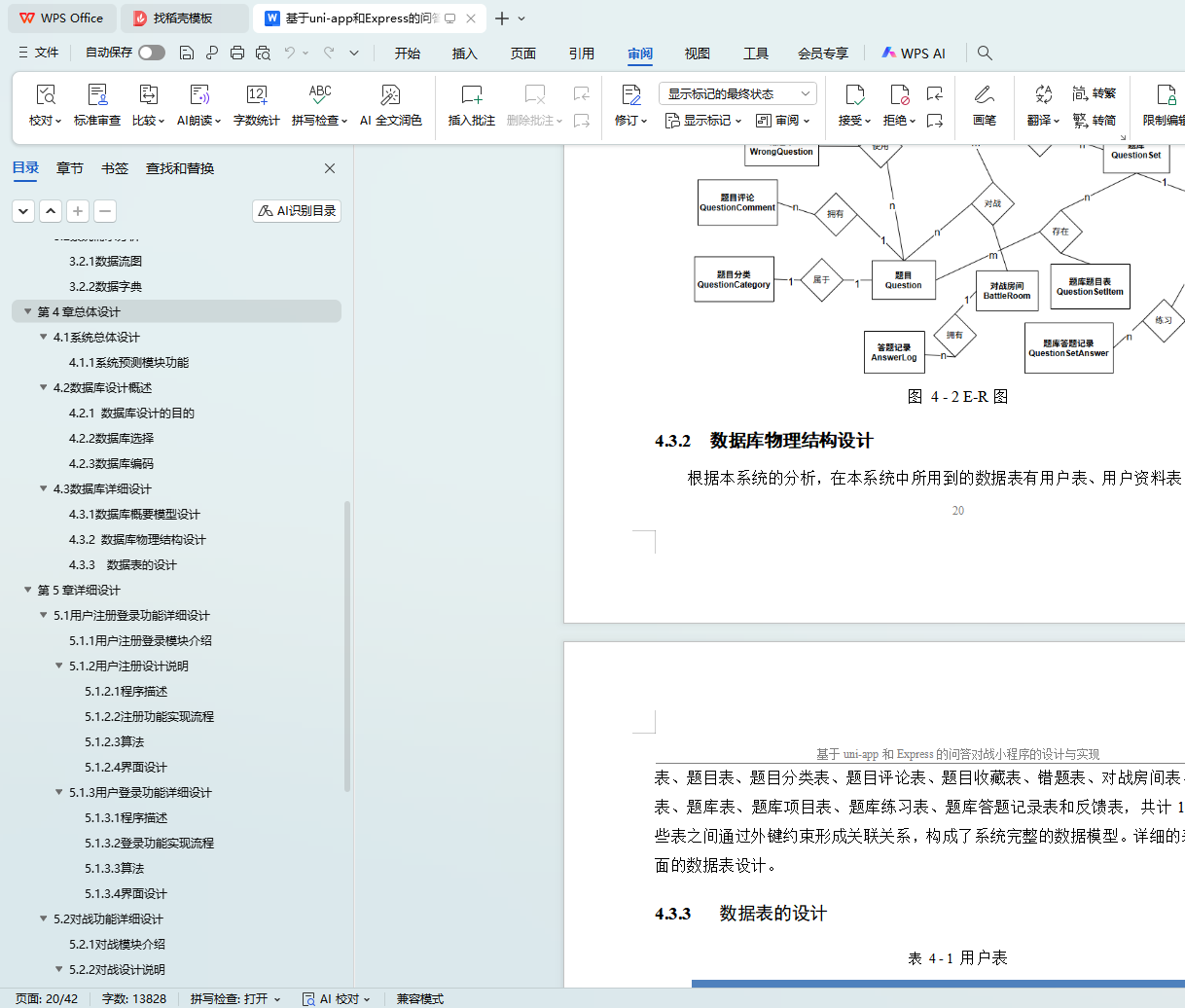
4.3.1 数据库概要模型设计
4.3.2 数据库物理结构设计
4.3.3 数据表的设计
第5章 详细设计
5.1 用户注册登录功能详细设计
5.1.1 用户注册登录模块介绍
5.1.2 用户注册设计说明
5.1.3 用户登录功能详细设计
5.2 对战功能详细设计
5.2.1 对战模块介绍
5.2.2 对战设计说明
第6章 系统实现
6.1 用户注册模块实现
6.1.1 注册模块前端核心代码
6.1.2 注册模块后端核心代码
6.2 用户登录模块实现
6.2.1 登录模块前端核心代码
6.2.2 登录模块后端核心代码
第7章 系统测试
7.1 测试目的
7.2 测试环境
7.3 测试用例
7.3.1 注册用例
7.3.2 登录用例
7.3.3 新增题目用例
结 论
参考文献
致 谢