摘 要
结构对称性对氧化铋(Bi2O3)是一种宽禁带的直接带隙氧化物半导体材料,它具有低介电常数、大光电耦合系数、高化学稳定性、高的激子结合能以及优良的光学、电学及压电特性等,因此在许多方面有着潜在的使用价值,可广泛的应用于太阳能电池、压电薄膜、光电器件、气敏器件和紫外探测器等方面。
对于Bi2O3材料的研究,我们已经取得了很大的成就,但是这些研究主要是集中于其材料的实验制备、功能和电子结构等理论工作。近年来,过渡金属掺杂Bi2O3等稀磁半导体材料成为了人们的研究方向,激起了人们的研究欲望。通过对氧化铋进行过渡金属的掺杂,能改变它的特性,同时也具有铁电性,所以成为了集成光电器件中一种极具潜力的材料。
关键词:氧化铋;结构对称性;稀磁半导
Abstract
The structural symmetry of the bismuth oxide (Bi2O3) is a wide direct band gap of the forbidden band of the oxide semiconductor material having a low dielectric constant, a large optical coupling coefficient, high chemical stability, high exciton binding energy as well as excellent optical, electrical and piezoelectric properties, so in many ways, has a potential value in use, can be widely used in solar cells, piezoelectric thin film photovoltaic devices, gas sensing devices and ultraviolet detectors.
Bi2O3 materials research, we have made great achievements, but these studies are mainly experimental preparation, focusing on its material functions and electronic structure theory. In recent years, the transition metal doped Bi2O3 dilute magnetic semiconductor materials become the people's research direction, aroused the people's desire to study. Alter its characteristics, also exhibits ferroelectricity transition metal doped bismuth oxide, it has become a promising material in the integrated photovoltaic device.
Keywords: bismuth oxide; structural symmetry; dilute magnetic semiconductor
目 录
摘 要
Abstract
目 录
1.1 引言
1.2 掺杂氧化铋的研究背景
1.3本论文的研究内容
四、掺杂Bi2O3的研究进展,不同离子掺杂对其薄膜的影响。
2氧化铋概述
2.1 Bi2O3的结构
2.1.1 Bi2O3的晶体结构
2.1.2 Bi2O3的能带结构
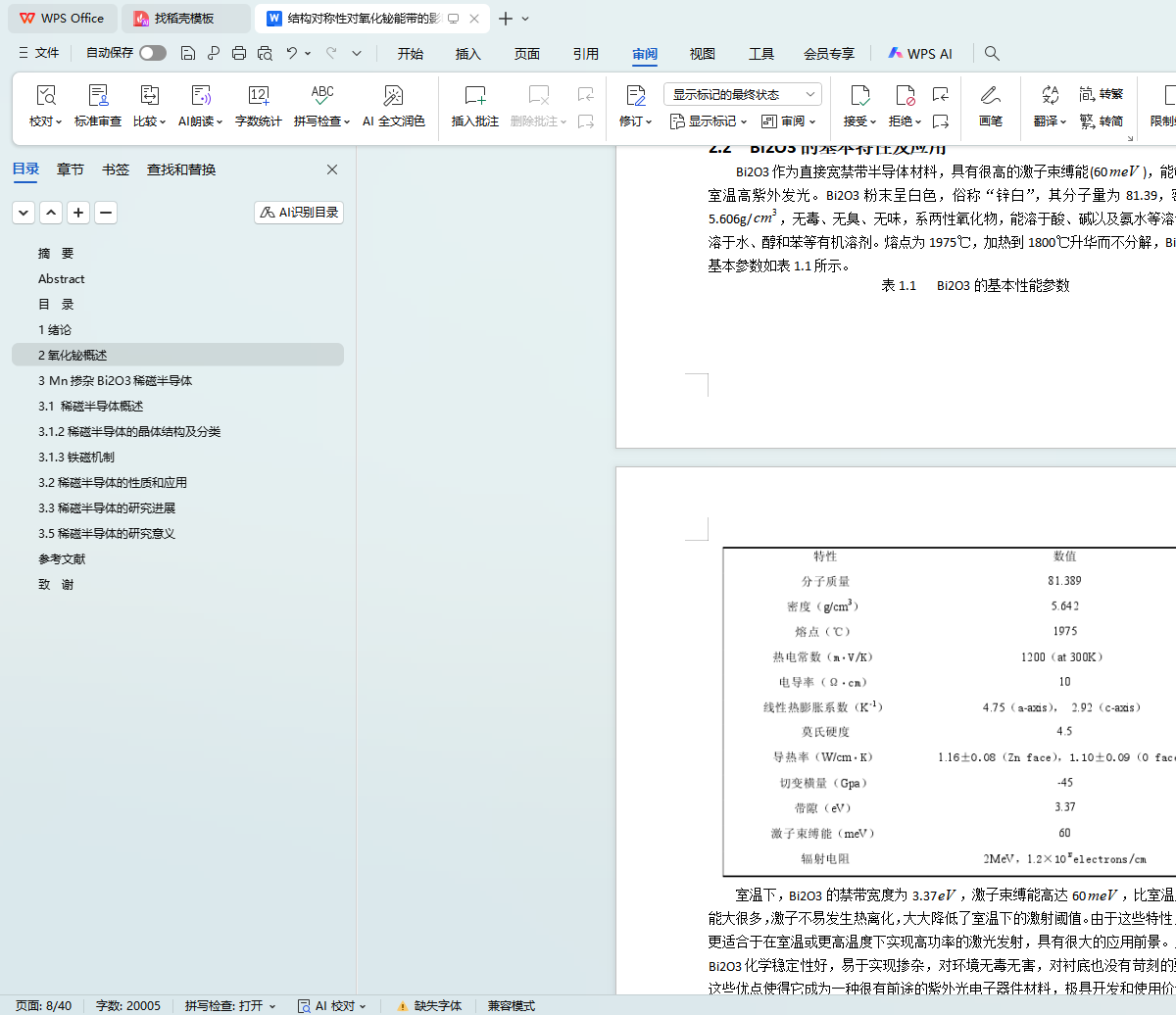
2.2 Bi2O3的基本特性及应用
2.3 Bi2O3材料的缺陷
2.3.1 缺陷的分类
2.3.2 缺陷的作用
2.3.3 掺杂方法
2.4 Bi2O3的形态结构
2.5 Bi2O3薄膜的应用
2.5.3 气敏元件
3 Mn掺杂Bi2O3稀磁半导体
3.1 稀磁半导体概述
3.1.1稀磁半导体的基本概念
3.1.2稀磁半导体的晶体结构及分类
(A)闪锌矿结构 (B)纤锌矿结构
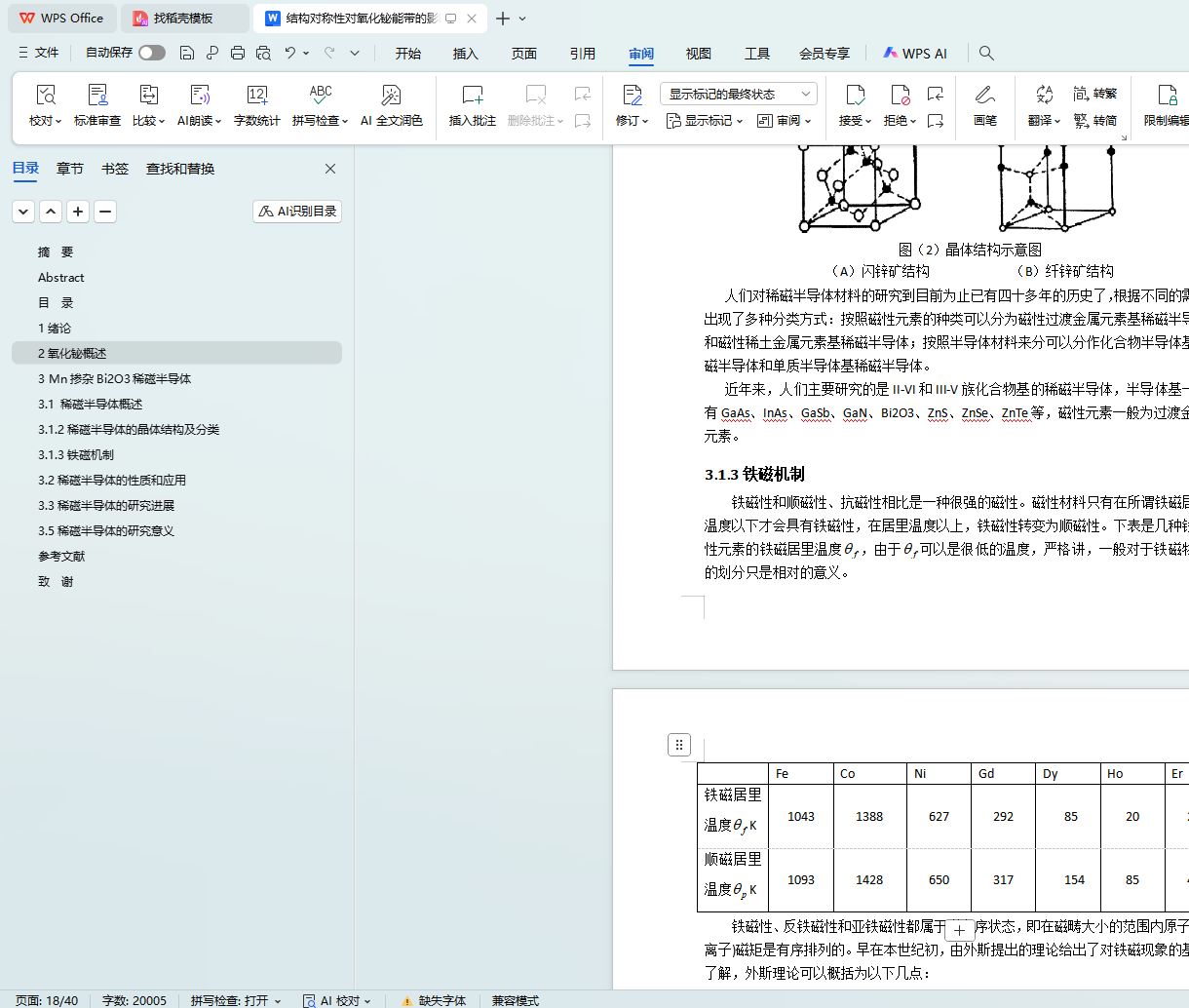
3.1.3铁磁机制
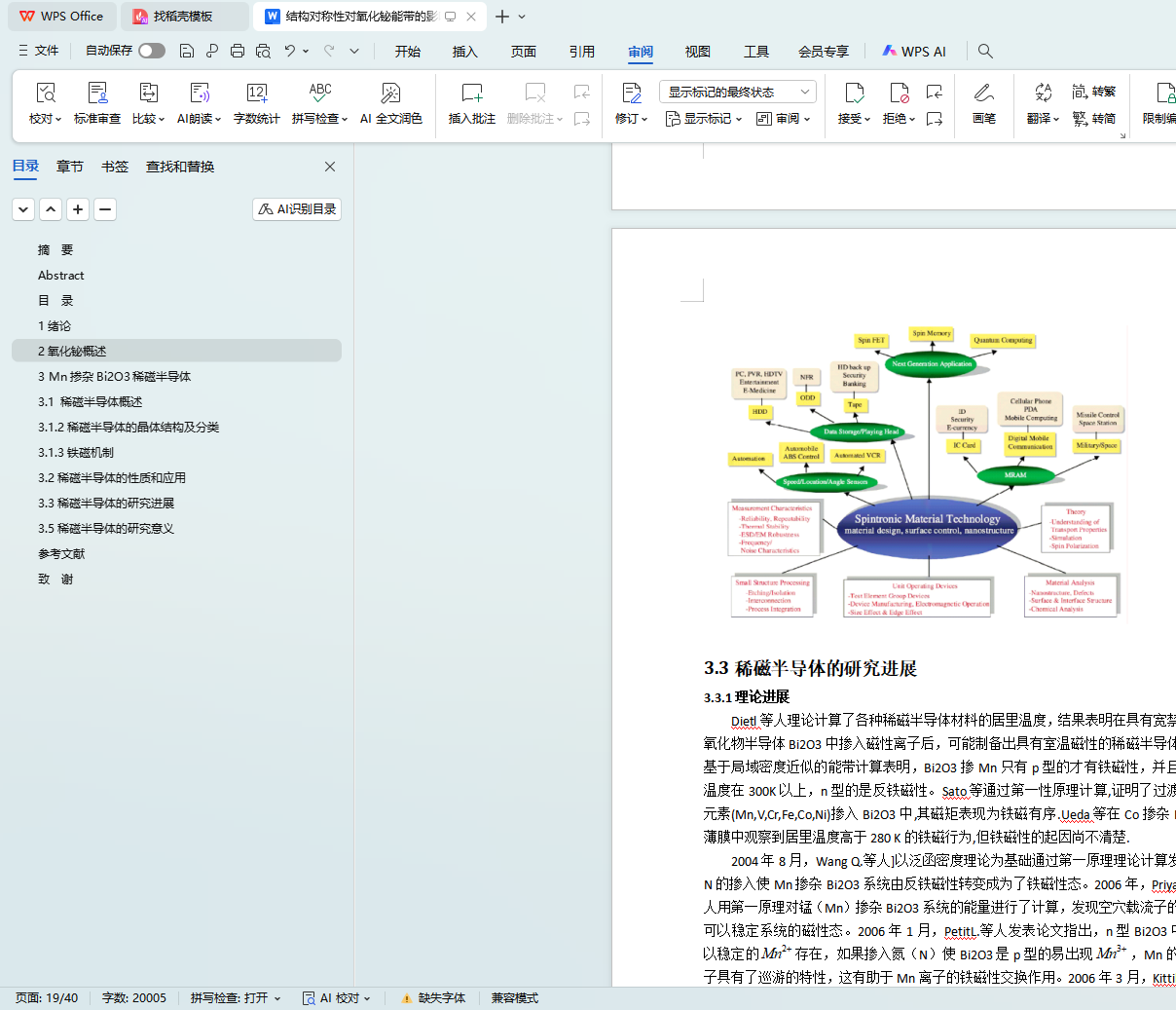
3.2稀磁半导体的性质和应用
3.3稀磁半导体的研究进展
3.3.1理论进展
3.3.2试验进展
3.4 稀磁半导体的制备
3.5稀磁半导体的研究意义
4 Mn掺杂Bi2O3特性研究
4.1研究进展
4.3 室温铁磁性研究
4.3.1 简单介绍
4.3.2 理论基础(密度泛函理论)
4.3.2.1 Tomas-Fermi-Dirae理论
4.3.2.2 Hohenberg-Kohn定理
4.3.2.3 Kohn一Sham方程
4.3.2.4交换-关联能函数近似
4.3.3 室温铁磁性的初步研究
4.3.4 不同退火温度对铁磁性的影响
4.3.4 不同掺杂浓度对铁磁性的影响
4.4 光学特性研究
4.4.1 Mn含量对薄膜吸收光谱的影响
4.5 Mn掺杂Bi2O3薄膜的研究意义
结论与展望
参考文献
致 谢